I haven't made a single psot to this bolg yet this year and it's almost half over already! So here's a short one...
The year was 1974. We were preparing to move from St Margarets to Duluth and it was our last night in New Brunswick. For the first time in my life I had someone I really didn't want to leave behind... my first beau. He was much older than I, and a "biker"! He rode a 1972 Honda CB500, and I loved it. It was a variety of different colours, starting with olive green and black, then black and gold, then blue and white. That last night we decided to take advantage of the warm evening and go for a spin on Highway 11 to Chatham (now Mirimichi). We were humming along a few miles from St Maggies when a bumblebee flew into the neck of my sweater and down into my bra where it became trapped. There it proceeded to sting my left breast. And sting it did!! The second I felt the initial pain, I hit Rick on the shoulder and he nearly dumped the bike. But we were able to liberate the bee and it flew off. It kind of spoiled the evening.
The next morning bright and early the four of us kids piled into the back seat of our Mercury Meteor sedan for the drive to Duluth via Brockville. It was crowded and hot back there. My bee sting was still very painful and I couldn't tell anybody about it because I wasn't supposed to be seeing Rick. So I suffered in hot, sweaty silence. For two days. Then it started to itch. How does one discreetly scratch the underside of one's breast when confined to the back seat of a car with an adolescent brother? I was never so glad to arrive at Grandma's in all my life!
It wasn't my first bee sting or my last, but it's the one I remember most clearly...
Sunday, June 12, 2011

Thursday, November 11, 2010
Remembrance
As I stood in the crowd under a warmer-than-usual November sun this morning I was struck by the thought that I'm completely unable to recall a single Remembrance Day service from my childhood. I know I attended many of them as a child... how can one avoid it when one is immersed in all things military by the accident of birth? But not a one stands out in my mind. I grapple with the why of it.
As I pondered this mystery all afternoon, the only conclusion that came to me is that I don't remember them now because they didn't really mean anything to me then. Sure, I knew that my grandfather died while in the service of his country, but his death was not in battle and therefore didn't "count". I knew that my great-grandfather had served in the Great War, but he came back. Our country wasn't involved in any dangerous missions while I was growing up and so the real meaning of all of it didn't penetrate.
Today my emotions were easily aroused. As I pulled a Kleenex from my pocket, I tried to understand. Part of me was so grateful for the sacrifices made by all who have served in the defence not only of our country but of fairness, security and humanity for all. The Last Post always raises the hair on my neck; when I hear it I think of my grandfather, Thomas Montgomery. He left his young wife and five daughters to heed the call to duty, only to find himself severely depressed by the separation and by chronic pain after a motorcycle crash. He took his own life in a guard tower in Prince Rupert on May 26, 1942; he was 38. It makes me think too of my Grand-uncle Maxie, Grandma Curry's little brother, who was killed in action near Ravenna, Italy on December 14, 1944 at the age of 32. I found myself wondering how hearing that bugle made my ancestors feel as they served. Did it give them goosebumps, or did it elicit tears they struggled to conceal? Or was it simply a marker that was forgotten as soon as it ended?
Another part of me was proud of the role my family members have played in the history of this country, whether at war or at home. Five generations. (Six if you count Amanda's time in the Cadet Instructor Cadre.) All have been volunteers. My great-grandfather William Jabez Cubitt was a married man with three children when he followed his two younger brothers into service in the Great War. He was 30 years and 7 months old on the day of his enlistment, September 5th, 1916. Young Herbert John, known as Jack, had enlisted on October 26, 1914, only weeks after Canada entered the war. He was 24 years, 6 months old. George Thomas, 2 years and 2 months older, followed him a week later on November 3. All three survived the war and went on to live long and productive lives. WJ even served in World War II as a recruiting officer. No military service is ever trivial. "They also serve who only stand and wait." John Milton was right about that.
Yet another part was awed by the number of young men and women I saw in uniform, standing at attention as the Cadet band played our national anthem. As always, the youth of the day gets a bad rap but there were many there today who were there voluntarily, wearing the uniform with pride. They are the leaders of our future and it made my heart full to be in their company.
And finally, part of me grieved for the lost... not only those who gave their lives but also those who have returned injured. I'm exceedingly proud of Connor, whose life is entwined with our daughter's, for enduring two tours of duty in Afghanistan. I only hope he is able to overcome the psychological and emotional effects of those tours.
There were hundreds of people there at St Albert Place today. It pleased me enormously to see the families with children... that didn't include a dad or mom in uniform. That gives me hope for the future that remembrance will not just fade away.
They shall grow not old,
As we that are left grow old:
Age shall not weary them,
Nor the years condemn,
At the going down of the sun
And in the morning
We will remember them.
-- Laurence Binyon (1869-1943)
Friday, July 23, 2010
Cyberweird

Is it just me or has technology blurred the lines between the past, the present and the future? I had occasion to venture into the cyberweird the other night and my experience inspired this blog post... and believe me, it's truly random!
I think I've mentioned before that I'm an amateur family historian. I've been formally and actively following the tendrils of my family tree since 1998. This exercise has been by turns frustrating, funny or fruitful, but always fascinating. Having access to digitised records from around the world has opened so many doors... Census records can be the most intriguing and informative of those records. (I promise not to go off on a tangent about the Canadian government's idiotic and short-sighted decision to make the long form voluntary. I promise.) So what does this have to do with anything, you wonder? The 1911 British census forms were filled out by the head of the household in their own hand, not by the enumerator, they give information about how long a couple has been married, how many children they've borne and how many are still alive. (Another tangent... not important right now because it's created a brick wall I never expected to have to scale...) There is also information about the family's home: the actual street address and the number of rooms in the home. (Bored yet?) This is where the cyberweird aspect comes in.
Someone sent me a link to a website called vPike. It's a companion site to Google's street view and gives one a peek into communities around the world. I've looked up our house and figured out when the photo was taken, looked at my parents' home and some old friends' homes (addresses from my Christmas card list). Then the other night, I had one of those freak jolts of brilliance - I might be able to see the actual homes where my great-great-grandparents lived!! Why did it take me so long?? There were a few problems with the search - some of the street names have been changed, or the census addresses were what the locals called the area, not the actual civic registration. But I did have some success, finding some of the addresses on my list and seeing homes that could well be more than 100 years old. It was COOL!!!! So from there I looked at the address given for Rick's great-great-grandparents in Fall River, Massachusetts (home of the infamous Lizzy Borden!) in 1880. The building I found at that address was a very old one, so it probably is the same one. These glimpses into the past were so gratifying, almost as good as chocolate.
Of course, there is nothing in this post that is a reminiscence... yet.
After a while I began to wonder whether my Grandma Curry's old duplex on Daniel St in Brockville was still standing. Grandma died in 1989 and hadn't lived there for several years by then. Sharon and I used to go there for lunch on school days because it was only a block and a bit from the old St Francis Xavier School on Church St. Mom worked the early shift at the New Wave Chinese Restaurant on King St and Dad delivered milk for Smith's Dairy so Grandma fed us every day, along with Clovis, her slightly-slow boarder. Her house was a bit different from what I was used to. There was a veranda with three steps up to the front door; a lilac hedge divided the sidewalk from that of the other half of the duplex. (I have always loved that scent!) The main floor was compactly arranged with the stairs to the second floor just inside the front door along the common wall. To the left of the entrance was her living room where she'd sit with tiny pin curls in her ever-thinning hair, on her black leather couch with the earphone of her transistor radio in one ear, tuned to a baseball game, while she watched boxing on TV, vigourously chewing Chiclets. The dining room extended across the middle of the house with stairs to the dirt-floored cellar underneath the staircase to the second floor and the door to the kitchen opposite. The kitchen was small with a counter, sink and cabinets along the left wall, her stove on the back wall and the fridge across from the sink. Her budgie Petey lived in a tall cage just inside the kitchen door. The kitchen opened out into what she called the back kitchen, where her washing machine lived, along with a treasure trove of bottles she'd collect for us to return for the deposit - ah, penny candy! The back door was on the same wall as the cabinets and led to a postage-stamp sized backyard with a clothesline, a back lane and little else. It smelled back there.
At the top of the stairs a hairpin left down a narrow hall took one to the bathroom. She had no sink in there, just a toilet and a huge, really old clawfooted tub. Next to the bathroom was Clovis' room; he lived there for as long as I could remember. Right across from the top of the landing was Grandma's room. There was a closet on the left side of the landing and a couple of steps down led into the third bedroom at the back of the house. I never thought much about it before but it must have been built over the back kitchen. That room was my favourite place in the house next to the veranda. It was a narrowish room with a sloped ceiling on both sides. The most beautiful (at least to me!) antique dressing table stood against the side where the common wall would have been. I would have given almost anything to be the owner of that!! A solitary window looked out over the back lane. I spent a lot of time in that house in 1965 and '66.
A really quick search on vPike showed me Grandma's old home... not as I remembered it but obviously unloved and heading toward dilapidation. Oddly, it's flanked by a spanking new oversized single garage where the ancient and always-locked old one once stood. The lilac hedge is gone and an unpainted picket fence is there in its place.
My curiosity fully aroused, I had to then take a look at the places where we had lived while we were in Brockville. Our first home there was a 3 bedroom apartment over a Thom McAn shoe store at 79 King St W. The building still stands, not looking a whole lot different than I remember. The shoe store has been replaced by a sales office for a luxury housing development called the Mooring (the St Lawrence River being only steps away). My memories of living there are not very detailed; we didn't live there for too long and I was only 8 when we left. I remember it being on the third floor, a long hallway, playing train with a bunch of old pasteboard luggage, the kitchen with its fire escape at the back. I remember starting a fire (a pyro from a very young age) on the stove because we'd always had a gas stove before and I couldn't figure out how the electric one worked. I remember going swimming at the boat launch near Hardy Park and pulling Bruce out of the water by his hair as he went floating by, clearly well over his head. And the time we went to swim off the dock without a grownup, scaring Mom half to death when a thunderstorm blew in and her not knowing where we were. I remember the day I came down with chicken pox; it was a warm summer Sunday and Dad had borrowed Uncle Mickey's Volkswagen to take us to the laundromat. I had the worst headache and was sent to take a nap in the Beetle. Then the rash erupted... But I don't remember much about the apartment itself.
That led to an exploration for our duplex at 61 George St. It seems to be gone, but there's another building a block further up the street that looks exactly as I remember our house, right down to the baby-turd yellow stucco. We had a huge back yard at that house that had hollyhocks growing all along the fence. The neighbours had three kids, the oldest a boy about 12 who built an incredible system of tunnels and stalags for his army men in their yard with which he recreated World War II. His name was Frank but we all called him Chubby. (He wasn't, don't know where the name came from...) I can't remember his sisters' names, but I remember a girl named Terry Mitton. I don't remember much about the interior of that house either, I suspect because I've suppressed those memories. (I will NOT remiminisce about why here.) I do remember a huge grate in the dining room floor that fed fresh air to the furnace but that's about it.
Imagine my shock and awe to discover that the New Wave not only is still right where it always was at 202 King St W, but it's still open and unchanged after more than 40 years. I had to share that discovery with Mom, who professed not to be surprised at all. Naturally, that led to me looking for the source of many beloved Friday night dinners, Manoll's Fish and Chips... still doing land-office business at 11 Buell St. I can almost smell the newsprint and vinegar!
After visiting the favourite and familiar, I had a quick jaunt over to my Aunt Betty's and Uncle Duke's house on Ferguson Dr... a place I'd only visited perhaps twice but much as my mind recalled it. Aunt Betty passed in 2000 from early-onset Alzheimers. Then I traipsed over to my Aunt Marian's former house at 34 Centre St... also only visited twice or three times, but it too is not really changed. Aunt Marian and Uncle Roy live in Killaloe now, not far from the old Golka family farm.
My trip down memory lane was cut short by the late hour and my need for sleep. So many memories were fired by looking at these places from the distant past, leaving me a little unsettled, but happy to have been there.
Monday, April 19, 2010
Fads, Trends and In-things...
No one could ever accuse me of being a fashion-forward kinda girl. More like a fashion-backwards one... I always seemed to be just behind the wave, if not inundated by it. Recently I was shuffling through about a million old photos looking for something for one of my girls, permanent evidence of my lack of style if ever I saw it. I've certainly never had the right... umm... frame for fashionable dressing, and I'm never gonna change that now. But there is hope. Stacy and Clinton, where were you thirty years ago? No wait, make that forty!
It was about this time of year that I got my very first ever pair of bellbottoms. Were they white duck, or navy blue button-front? Were they tie-dyed and oh-so-cool? No. They were navy blue cotton with tiny flowers all over them. I picked 'em out myself at the dry goods store in Kindersley, spending my hard-earned babysitting money, and I was twelve. If I recall, it was the first time I'd ever shopped for clothing that didn't involve a catalogue of some sort. Which brings me to some of those really tragic choices. The very first outfit I bought with my own money was a slippery polyester three-piece disaster - a pink, long sleeved blouse, a pink "gingham" belted vest and matching skirt. I wore it for my Grade V school picture along with my granny glasses and ringlets. (Eeewww!) The photo was such a disaster that Mom agreed I could have retakes, and for those I wore a shades-of-red lightweight denim sleeveless top and shorts that my mom had made for me. Better!!
If that wasn't bad enough, when I went into Grade VI, I wanted to be "in style" so I parted my hair in the middle, grew out my bangs and fought daily to keep it straight. It came down to about the bottom of my chin, or maybe a little longer. I had a mostly-avocado-green psychedelic print dress with a white collar that I wore for photos that year. Did I mention that I'd broken my black plastic cats-eye glasses on the ski hill and they were held together on the left temple with white adhesive tape? When the photos came home that year my Nan was visiting us; she wanted to know why I was so upset by them so I showed her, looking for sympathy and a big hug. What I got instead was, "Well, it looks like you, dear". WAAAAAAAAAAHH! (No retakes that year... I missed them because I was sick.) I think there may still be one or two of them living in the basement at Mom and Dad's. Then there was the parish directory photo... OMG did I look awful. The centre part was gone, but the red cardigan I wore didn't do much to disguise the pudge, and the unfortunate "leather" choker I'd made for myself using an old crown-shaped button as a centrepiece made my neck look like a bulldog's. Sigh.
By Grade VII I really didn't want any more nasty class photos so I chose something very plain and boring. Or at least that's how I saw it. My hair was much longer by then and I let it curl like it wanted to; I just couldn't wear it loose all the time because it got in my way. So I tied the front part back and left the rest loose. It looked okay. My outfit was a red vest and pants over a turquoise turtleneck. I was a bit slimmer, having started to spend a lot of time in the pool and on the ski hill and my freckles had started to fade. Looking at it now, I think overall I looked pretty good! Serious, a little somber, but good. My confirmation photo is one I like a lot; I wore a navy blue dress with white sleeves and light panty hose. I looked like everybody else and that was a good thing.
My class photo from Grade VIII is a real horror show. By then I had started "filling out", which is just a really PC way of saying I started getting heavy. There I am, third from the left, next to Sue Ward, who is next to that evil little John T Cook. My hair is in a side ponytail with my bangs scraped off to the left and plastered to my forehead. I'm wearing a plum-coloured bonded knit sweater with a tiny geometric pattern knitted into it and a zippered neck, plus matching solid colour bonded knit plum coloured pants. The photo is black-and-white but in my head it's in living colour! Lynda Fox's expression says it all - That Jan REALLY needs a stylist!!
I don't recall a class photo from Grade IX; however that was the year I bought the oh-so-amazing white "leather" jacket that I used to clean with Fantastik. I wore my dad's shirts a lot then, trying to disguise my chest. That was the one time I was a little ahead of the parade - Madonna didn't start wearing torpedo bras for about ten years.
By Grade X I'd cut some layers into my hair, which made it extraordinarily unruly. The Ms. B. Smart English 102 class photo from that year is okay because I'm in the second row and only recogniseable because I know it's me, and I'm not the largest person in the room. Talk about big hair though, before it became fashionable in the 80's. My top was red knit with a red-and-white checked collar and cuffs, again only a vivid memory. That was the year of plaid baggies, platform shoes and contradictions. My dad took me shopping for my birthday and I, still clamouring to be a fashion icon, bought a pair of orange-and-brown-plaid-on-a-cream-background baggy pants and a matching orange shirt. (Have you ever seen me in orange? NO!! and you won't ever!!) It was a really attractive outfit, but not for me. As for contradictions, girls wore baby-doll tops over turtlenecks (I was lucky, I just appropriated my mom's maternity tops) or very fitted tops that emphasized the bustline, tied at the back. It was also the year of Beth Farrell's white halter top and cut-offs. (Cathy Pineau wore a white halter too but she didn't fill it out quite the same.)
In the summer of 1974, we moved to Duluth. I locked myself in the bathroom with a pair of scissors and cut off all my hair. I gave myself a very mod cut, actually rather like a bowl cut with heavy bangs curled under with a curling iron, and the sides also curled under in fat sausage curls. (I still have tiny scars over both cheekbones and above one eyebrow from that curling iron.) For Grade XI I looked... almost cute... in my light blue scoop-necked, puffed-sleeved sweater and octagonal granny glasses. I really just wanted to blend in.
The big fads in my senior year were plaid work shirts and "star" jeans that you could only get in Canada. Everybody who wanted to be "in", both guys and girls, went to Thunder Bay to shop for the heavy denim, snug-at-the-waist-and-hip but gargantuan-from-the-knee-down jeans with the embroidered stars on the back pockets made by GWG. ("Woohoo, over here! Canadian girl over here!") I had a navy blue plaid work shirt that I wore as a jacket, and my own pair of star jeans... I had arrived. I also got new glasses, huge aviator frames with Photogray lenses that seemed to ALWAYS be gray. My yearbook photo was taken only a few days after I'd gotten the new glasses and the optician offered to lend me a pair of frames without lenses so that there'd be no glare. I don't think I was squinting. I wore a pale blue blouse and a gray sweater. My hair had evolved again and now was blown back from my face on the sides, but still with the heavy bangs.
I'd like to say that when I left my teen years behind I left the fashion faux-pas there too, but alas. I did the big hair and bigger glasses, I did the shoulder pads, I did the humungous sweaters over stirrup pants... the mom jeans, cargo pants, tunics. But I've never worn my underwear as outerwear, nor even tried on "Hammer" pants, avoided slip dresses and skinny jeans, and I'll never go out in public in yoga wear, except to walk the dog. I'm never going to turn heads a la Carrie Underwood... or Bjork... and I'm okay with that. With suggestions from What NOT to Wear, I've begun to select clothing that flatter me, fit me and make me feel good... notwithstanding the Moosehead t-shirt and old jeans I'm wearing right now. Some days you've gotta go for comfort over style!
Saturday, January 9, 2010
Really Random!

A post on a message board from a nurse in the Philippines asking which city was more cosmopolitan, Saskatoon or Regina, got me thinking. After I stopped laughing, that is. I and two other members of the board attempted to describe Saskatchewan to someone with no obvious frame of reference. Finally I posted a photo of an abandoned farm house and an antique but functioning thresher. And therein lie the roots of this post...
Abandoned farm houses and barns have always intrigued me in a way I can't explain. They inflame my imagination and curiosity to such an extent that I find myself "seeing" the people who may have lived or worked there, wondering what they thought about their lives and their futures. What did they do on long winter nights when the snow-filled wind howled around the eaves and the supply of lamp oil was low? What did they do for fun? Were they happy? Why did they leave, and where did they go?
My first memory of this intense thirst for insight was of a summer day in Grimshaw when I was about six. We were living with Nan then in her little two bedroom house a couple of blocks from 'downtown'. I had five cousins there who were older than I, two who lived on a farm outside of town and three who lived in town, as well as one my age. There was a family gathering at one of the farms and I was excited and happy to be included. I was wearing my only dress that day because it was special occasion for me; it was brown print cotton with a full skirt and a buttoned-up bodice. The collar was white, if I recall correctly. In the afternoon while the grown-ups visited, we kids explored the farm; we climbed the baled hay stacked many feet high (only Ronnie made it to the top and collected a bunch of eggs he found up there), sat on the tractor and pretended we were farmers, chased the cats and the chickens and then ended up in the barn. We climbed the ladder into the loft, swung from the block and tackle used for hoisting bales of hay up there and raised a ton of dust. Some of my cousins decided we should slide down a plank leaning against one of the beams that created the loft. I was six, remember, and didn't think of the consequences of such an activity... the ignominy of having my mother pluck dozens of splinters out of my tender rear end. Such an ending to a wonderful day!
Another time my older cousins and I explored an abandoned building near the main street of our little town. It had to have been a business because I remember playing with a typewriter, an old Olivetti with round black keys. There were papers and books strewn all about, several inches deep on the floor. Some of the windows were broken, but I'm pretty sure we didn't get in there through a window. I stepped on a nail that pierced right through the sole of my red canvas sneaker; the shank of the nail broke off and protruded out of the rubber. That meant a trip to the doctor's office and, of course, a tetanus shot. When would I learn?
We used to play in a car graveyard too in those days. There was what seems, in my child's memory, dozens of rusted-out hulks with flat tires in a yard in town that no one seemed to supervise. We'd go there and play in the old cars, pretending we were taking trips to exotic places like Peace River and Grande Prairie. We could drive you know, even though we were all just little kids. There were a couple of cars that were our favourites, ones that still had intact upholstery and no mice. It was great fun.
When I was a few years older (maybe eleven or twelve) and living in Saskatchewan, I again had the chance to explore an abandoned building, this time a farm house several miles from Alsask on a dirt road. I don't remember who I went there with, but I think it might have been my sister's friend Kim Longmuir and her family. The house was a two-story four-square similar to the one in the photo above. There was faded wallpaper on the walls and a carpeted runner on the stairs. Most of the windows were still intact but there was a thick layer of dust everywhere. Some of the furnishings were left behind... a chrome-legged table and several cracked-vinyl chairs, an armchair and a small table, an old metal bedstead with a holey mattress, a lamp. It was like the inhabitants had packed up what mattered and moved on. Houses were built to last in the early part of the 20th century and this house was still quite sturdy; the stairs were safe to climb and climb them we did. The view from the windows was that of unending golden fields dotted with the occasional stunted tree and a dome of blue sky. I remember feeling deeply disappointed when it was time to leave. (Is that how the woman whose home we were invading had felt? I like to think so.)
Thursday, December 31, 2009
A New Year's Eve I'd completely forgotten
When I was on my way home from work after my night shift the call-in topic of the morning show I was listening to on the radio was about most memorable New Year's Eves... for all the wrong reasons. As I headed my car down the hill by the university I started thinking about that, and this memory surfaced...
It began on the day before New Year's Eve, 1970 when we were living in Alsask. Around lunchtime the phone rang; it was a woman who worked as a waitress in the hotel bar where Mom was a waitress in the dining room. She wanted to know if I would babysit her little boy while she and her husband drove a transportation-less couple (our next door neighbours the Nowans) into Kindersley to have their baby. I'd never worked for them before although I had a large clientele for my babysitting services. I already had a job lined up for New Year's Eve but that was more than a day away, so I was only too happy to make a little more money. How long could it take to drive someone into Kindersley anyway?
Little did I know they'd planned to stay with the other couple until the baby arrived, first babies usually took their sweet time doing that and it would be many hours before I returned home.
I walked the short distance to the Gauthiers' house with a book and a roll of Lifesavers in my pocket. The couple was in a hurry to leave so they gave me some brief instructions about their toddler and his routine. Oh, and the dog had been spayed the day before and was still a little sedated, but she'd be fine... And away they went.
The dog was a huge Newf with a white blaze on her chest that made her look like a Himalayan black bear; she was solidly sleeping it off in the front hallway. I'd never seen a dog that large and was more than a little scared of her. The little boy was at the age where he made strange so when he woke from his nap he took one look at me and began to scream. Between trying to calm the child and my dreading the moment when the gi-normous dog regained consciousness, my stomach was in knots. When the Gauthiers hadn't returned by suppertime I scrounged around and fed the baby. A couple of hours later I broke down and helped myself to some of their groceries. A while later I put the baby to bed and settled in to watch TV. I had a choice between CFQC (CTV) from Saskatoon, French CBC and CFCN (CTV) Calgary. With rabbit ears. And LOTS of snow. I struggled to stay awake; it was a point of honour for me that I never fell asleep when I babysat. I was not being paid to sleep, after all. I was completely fine with both the baby and the dog remaining asleep, however!
Somewhere in the middle of the night the baby woke me up. He settled back down to sleep and I curled up in the by-now-chilly living room with a blanket and my book. The dog slumbered on. I don't think she had moved at all in all the hours I'd been there, although she was definitely breathing - I could hear her from across the room. I dozed off several more times, shaking myself awake each time, mortified in case the Gauthiers would come home and find me sawing logs. I needn't have worried. They returned around noon with the news that Sue Nowan had given birth to a boy that morning and both mom and baby were fine. I grabbed the $10 they gave me and sprinted for home and bed.
That night I walked over to the Wiazeks at the appointed time. I was torn between pretending that I'd had a good night's sleep and would be my usual highly responsible self and telling them the whole story about the night before. In the end I told them, and Mrs Wiazek was so nice, she told me it would be just fine if I was asleep when they came home. If I wanted to I could just sleep over. (I was SO relieved!!) In the end I chose to go home to my own bed at 2 am when they came home; Mr Wiazek drove me home, something that NEVER happened on that tiny radar station but totally welcomed that night.
Oh, yeah... what about the dog? She woke up not long after the sun came up, stretched mightily, groaned a bit, ambled to the back door and gave me a look that said, "Lemme out NOW!" When she came back in she went back to her rug in the front hall and promptly went back to sleep. She had no intention of eating me, which was absolutely fine with me.
Saturday, May 30, 2009
Ah yes... the beach party at Loggieville...
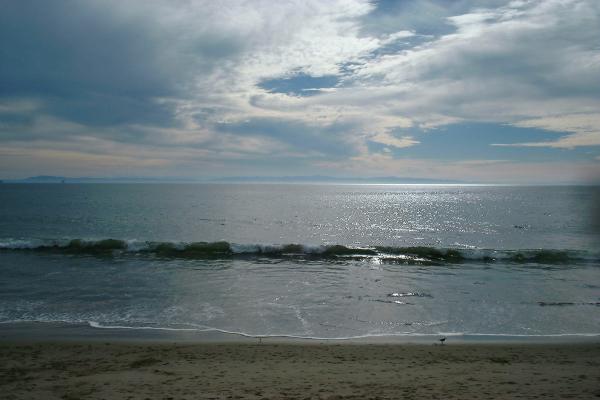
That summer that I was fifteen, my cohorts at Teen Town planned and executed a beach party on the shores of the Miramichi river, down the road from Chatham and almost to the Strait of Northumberland. The water there is never warm, but that doesn't matter to a bunch of teenagers, and there was a rather nice beach there, so we had all the elements of a lot of fun.
I was much more self-conscious back then than I am now and wouldn't have been caught dead in a swim suit. (I didn't even wear shorts until I was about 30!) I was probably the only one on the beach wearing jeans and a tee-shirt, but that was okay with me. The other girls were decked out in their skimpy bikinis or halter tops and cut-offs. For a change the weather actually cooperated with our plans and the sun shone brightly.
What makes this event so memorable for me was the curiously bizarre situation that led to me becoming a drug trafficker for the day. Sort of. I was one of the kids who was not paired off at that point in time and so I spent some of the afternoon strolling along the beach with Paul Pennimpede. We came across evidence of someone riding a horse down the beach a few days earlier. This evidence was above the high-water line and was quite dried out. I jokingly suggested to Paul that we might convince someone that it was some other form of vegetative material... if it was presented correctly we might fool them into thinking it was marijuana. (Goes to show just how much I knew about marijuana! And how warped my mind was then... not that it's any less warped now.) Anyhow, Paul mooched some Vogue rolling papers from one of the other guys and then rolled a couple of "joints" from the horse manure. On our stroll back up the beach the first person we came to, Paul Farrell, took the bait. To this day I can't believe that happened because of all our crowd, Paul was the MOST familiar with horses and their effluent. His dad owned two race horses that were stabled in Chatham; Paul was responsible for their day-to-day care. But he was hornswoggled into believing that we'd given him a real joint. He fired that doobie up and took a huge toke. Then he coughed really hard before saying, in a tight and breathless voice, "That's some GOOD shit!" My partner in crime and I nearly turned blue trying not to laugh our behinds off. I don't recall if we ever came clean about the origin of the shit, but I do remember how funny it was to see Paul smoking it!
And that's the story of how I was a pusher-for-a-day.
Thursday, May 14, 2009
The October Crisis... as seen through the eyes of a 12 year old

As if the notion of missiles from Russia wasn't scary enough, in October 1970 the relative safety and security of all Canadians seemed to be threatened from within. On October 5, the Front de Liberation du Quebec kidnapped a British diplomat named James Cross in Montreal. This represented an abrupt escalation of terrorist activity by the FLQ which until then had satisfied itself largely with blowing up mailboxes in the affluent Anglo neighbourhood of Westmount. I was 12 and only just developing an interest in current affairs outside of my own realm of awareness. The Saskatoon Star-Phoenix and the grainy, fuzzy black and white images on Channel 7 were my sources of information. Sketchy and vaguely understood.
While Quebec was physically very far away, we had only just left there to move to Alsask. A 12 year-old's understanding of such things as terrorism in 1970 was very different from that of the modern 12 year old whose exposure to CNN, the Internet and other sources of information are a quantum leap ahead. I struggled to connect the events in Montreal to the reality of my own world and came up short.
On October 8 all media outlets in Canada broadcast the FLQ's manifesto, a rambling and incoherent jumble of demands. Transcripts of the translation read in part:
"The Front de Libération du Québec wants total independence for Quebeckers; it wants to see them united in a free society, a society purged for good of its gang of rapacious sharks, the big bosses who dish out patronage and their henchmen, who have turned Quebec into a private preserve of cheap labour and unscrupulous exploitation.
The Front de Libération du Québec is not an aggressive movement, but a response to the aggression organized by high finance through its puppets, the federal and provincial governments (the Brinks farce 1, Bill 63, the electoral map 2, the so-called "social progress" tax 3, the Power Corporation, medical insurance - for the doctors 4, the guys at Lapalme 5...)
We have had enough of promises of work and of prosperity, when in fact we will always be the diligent servants and bootlickers of the big shots, as long as there is a Westmount, a Town of Mount Royal, a Hampstead, an Outremont, all these veritable fortresses of the high finance of St. James Street and Wall Street; we will be slaves until Quebeckers, all of us, have used every means, including dynamite and guns, to drive out these big bosses of the economy and of politics, who will stoop to any action however low it may be, the better to screw us.
We live in a society of terrorized slaves, terrorized by the big bosses, Steinberg, Clark, Bronfman, Smith, Neopole, Timmins, Geoffrion, J.L. Lévesque, Hershorn, Thompson, Nesbitt, Desmarais, Kierans (next to these, Rémi Popol the Nightstick, Drapeau the Dog, Bourassa the Simards' Simple Simon and Trudeau the Pansy 17 are peanuts!)."
Vive le Quebec Libre.
http://english.republiquelibre.org/Manifesto-flq.html
On October 10, another FLQ group, the Chenier cell, kidnapped the Quebec Labour Minister Pierre Laporte from his front lawn, an act that was witnessed by his nephew. A week later, one day after le Premier-Ministre Robert Bourassa asked Prime Minister Pierre Trudeau to invoke the War Measures Act, Laporte's body was found stuffed in the trunk of an abandoned car near the airport at St Hubert. The safety and well-being of Mr Cross was unknown but his captors were insistent that his release was dependent on the fulfillment of their demands for the release of "political prisoners" being held for terrorist activity by the Quebec police.
Since we lived on a Canadian military radar station, it was thought that our little community could be a target for terrorist attack. We were all kept in a state of high alert and the army was called in to ensure our safety. We were instructed to inform our parents or teachers of any suspicious strangers we might see lurking around our homes or school; since there were only 124 houses on the station and a couple dozen in the village, strangers would have stuck out like a sore thumb and we viewed it as a game. We kids really had no idea of how serious all of this was. In retrospect, we were protected from the reality of it all by the adults in our world, a job that is all but impossible today. At the time, this was our 9-11 but we didn't know it.
On November 6, the QPF raided the headquarters of the Chenier cell of the FLQ; most of the members scattered but Bernard Lortie was arrested and charged in the kidnapping and murder of Pierre Laporte. It was nearly another month before British Trade Commissioner James Cross was released on December 3, at the same time that 5 high-ranking members of the FLQ were granted safe passage to Cuba. On December 28, the last 3 Chenier cell members to be arrested were finally caught in a 6 meter long tunnel in a farmer's field in St-Luc. They too were charged in the Pierre Laporte kidnap-murder case.
These events had far-reaching effects: popularity for the violent FLQ waned allowing the growth of the politically-active Parti Quebecois and its subsequent rise to power as the ruling party in 1976 and the creation of the Bloc Quebecois at the federal level following the failure of the Meech Lake Accord. Strong criticism of the federal invocation of the War Measures Act led to a rift in the Liberal party and the eventual success of the federal Conservatives under Bryan Mulroney.
When all is said and done, I'm happy that I was born when I was; by the time the instant-communication revolution had occurred I was already an adult and could cope with knowing of the evil man does unto man. The Challenger, the Gulf War, 9-11, Katrina, all these things that terrify our children and their children... We were protected from that. I wish we could extend that protection to the innocence of today.
Sunday, May 10, 2009
Travels with my Dad
One facet of military dependency is the frequent moves necessitated by operational requirements. During the Cold War, most military families moved every two years or every three at most. And if you were posted into an isolated community, you had to request an extension of your posting if you wanted to be there more than two. Mont Apica was quite isolated, situated as it was in the middle of rural northern Quebec, so postings there were two years and few people asked to extend. That's how we found ourselves in the little Red Comet that Dad bought from Gely Bouchard, on the move to Alsask.
Anyone who has driven across northern Ontario will usually choose a different route the next time. Dad decided we would drive through the States to get past that stretch of nothingness and so there we were, rolling through the Upper Peninsula of Michigan on an early August day in 1968. As the day neared its end, the weather turned inclement; we were tenting (our first foray with the huge green thing) so the parents thought we should look for a campgrounds early rather than risk being caught in the rain. Have you ever driven across the Upper Peninsula of Michigan? There's a whole lot of nothing-but-trees there! So now it was dark, the three of us in the back seat were tired and hungry and the two in the front seat were wondering what they were going to do now.
Oh look... there's a state police car behind us and he's got his lights on... "Excuse me sir. Did you know you're driving with only one headlight? That's against the law in Michigan, sir. Oh, you're looking for a campground? What was wrong with the one a couple miles back? Yeah, umhmmm, there's one about five miles back. How 'bout I show you?" So Dad did a u-turn and we headed back the way we came. Sure enough there was a campground off the highway a piece, not that there were any campers there. Mom and Dad got out of the car and struggled in gale-force winds and teeming rain to erect the Green Monster. After about 10 minutes of incredible effort, they decided to take their chances with Smoky, and threw the tent back in the trunk. We'd spend the night in a motel, out of the elements, and we'd figure out how to pay for it later...
NO VACANCY. NO VACANCY. No motels for miles... by then it was really late, we'd been driving forever and the three in the back seat were sound asleep. Mom was sleeping too (she could sleep in a Leopard tank as it rolled over houses back then, I swear... but I suspect it was all the Gravol she needed just to keep her coffee down) so Dad looked for a place to pull over so he could catch a few winks.
Early the next morning we all woke up to discover that the parking lot Dad had pulled us into was next to a church. And it was Sunday. Everybody was curious about the little red car with the Quebec license plate and the fogged up windows. We looked out the windows to see the townsfolk looking in. I thought Mom would die of embarrassment. But it was just another Curry Caper, destined to be talked about at odd times when the mood to reminisce strikes. Like today!
Friday, May 8, 2009
Education takes many forms
Remember the story of moving the library? Well, there were other "educational" pursuits we carried out at John A Silver School that weren't technically approved by the Saskatchewan Board of Education. We learned a lot of things that were probably more useful through them however!
In 1971, the province of Saskatchewan threw a series of celebrations related to the signing of treaties that allowed European settlement of the grassland prairie eventually leading to the induction of the province into Confederation in 1905. Alsask was no exception to the celebratory mood. The radar station got into the act by incorporating Homecoming '71 into the annual winter carnival and by providing a lot of resources for the Homecoming Parade in the early summer.
One feature of the winter carnival was a snow sculpture competition. Individual families built them on their front yards and the four teams that the messes divvied into also created team sculptures in a central spot. In 1971, the students of John A Silver got involved too. We had the guys from Motor Support Equipment pile a bunch of snow on the playground closest to the kindergarten room, where we built a tipi and an aboriginal man sitting cross-legged in front of it smoking a pipe. We painted our sculpture with tempera paints from our art supplies and learned about the native Saskatchewan people while we worked. Well, didn't our sculpture win a special prize!!
We had SO much fun with the sculpture that we begged to be allowed to have a float in the parade. Mr Proud was a tough man to convince but in the end he relented. I'm sure we used an entire year's worth of industrial toilet paper to make the flowers we put on our float. There was a bit of a dilemma when it came to the fact that all our flowers were sort of a dingy not-quite- white, until someone suggested spray paint. We ended up with red, green and white toilet paper flowers that we stapled onto a sheet of plywood to spell out "Homecoming 1971" that was then turned into a billboard. Mr Winter, being a farm boy, provided a flatbed hay wagon and a tractor to tow the float in the parade. (There had been a devastating fire on the Winter farm the previous autumn; their home was lost but all their farm equipment was spared.) We pulled together some "period" costumes and the people riding on the float represented the early settlers of the province. (I didn't know then that my great-grandparents Mabel Shaw Cubitt and WJ Cubitt, and her father Albert Shaw had been among them!) The parade was a roaring success and we had a ton of fun building our contribution. We learned something about Saskatchewan history, but more importantly we learned teamwork and mutual respect. Who says education has to come from board-sanctioned textbooks?
Thursday, May 7, 2009
Dance, dance, dance... Rock around the Clock
In 1969 a movie was released called They Shoot Horses, Don't They? It starred Jane Fonda and Michael Sarrazin and the backdrop of the movie was a 1930's era dance marathon. This movie finally found its way into the James Park Theatre in St Margarets sometime about the winter of 1972. Now, since there was really nothing to do in St Margarets most of the time other than go to each of the 3 movies screened in the station theatre, most of us did that for fun. This movie led to some very interesting experiences.
Most radar stations had a place for teens to hang out that was safe and handy that we called Teen Town. St Margarets had a small building right next to the outdoor skating rink that housed Teen Town. Someone donated a stereo system and we furnished it with old furniture that we collected from the curb on garbage day. We did some fun stuff, and hired a DJ for special occasions. But none of us had a large enough allowance to really pay much for our dances and parties so we had to come up with fundraising ideas. I don't know whose brainstorm it was to have a dance marathon but that's what we decided to do. (Actually, we had two of them.) I wasn't involved with the first one; I wasn't one of the "in" crowd, wasn't going to have a partner and just knew I'd never get anyone to sponsor me. It was held in the gym in the Rec Centre and lasted 18 hours. The money raised was enough to pay for a beach party at Loggieville. (I'll tell you about THAT later...)
When the success of the first marathon was noted, my Ranger company decided to take a chance and have a rock-a-thon to raise money for new uniforms. We borrowed a bunch of rocking chairs, got permission to use the gym and got our usual Teen Town DJ to agree to play some music to help us stay awake while we rocked. It only lasted about 12 hours but we raised enough money to get our new uniforms. Because there were no boys there though, it was pretty boring!
Our second dance marathon was even better than the first. There were a whole bunch of couples this time. Sharon danced with Bernie McInnis who had just had a bunch of dental surgery and was miserable. We had some couples from Chatham too; there were probably 20 couples who started out. I spent the whole time sitting with the DJ, who was by then my boyfriend. (Nobody noticed when we wandered outside to have some private time... Stairway to Heaven and In A Gadda Da Vida, you know...) The couple who won, Wally Nykolyshyn and Bonnie Stockill, lasted 24 hours! Wow!! Somewhere around here I have a picture of that event. I'll have to dig it out and add it.
I really think that we had a lot of advantages as children dependents of military members. Doing something like this would have been very difficult in another type of community. I'm glad I had the chance to be involved.
Tuesday, May 5, 2009
What doesn't kill ya
Kids do some really crazy things and I'm no exception to that rule. I think this time of year is when I tend to be my nutsiest too.
Way back in 1972, when I was still in Grade VIII with that horrible little man John T Cook for a teacher and right around this date, we went on a hike to Wine River. It was maybe a couple of miles out to the artesian well. We all packed our lunch and headed out the dirt road from the radar station into the woods. The weather in early May in New Brunswick isn't especially balmy, with the daytime highs usually in the 10-15 C range, but often dipping into the 0 range. On this day there was still ice on the pond near the well and some of us were able to see a beaver swimming around underneath it. The river flowed fast enough that the ice was gone from it. I don't know whose brilliant idea it was, maybe Eddie Sears', but there I was, swimming in the frigid water of Wine River in early May. Three or four of us went in wearing our clothes. That was the only time I ever went in the water there, but such a memorable swim. It was a REALLY long walk back to the townsite let me tell you, dripping wet and covered in gooseflesh. I wonder who else remembers?
Way back in 1972, when I was still in Grade VIII with that horrible little man John T Cook for a teacher and right around this date, we went on a hike to Wine River. It was maybe a couple of miles out to the artesian well. We all packed our lunch and headed out the dirt road from the radar station into the woods. The weather in early May in New Brunswick isn't especially balmy, with the daytime highs usually in the 10-15 C range, but often dipping into the 0 range. On this day there was still ice on the pond near the well and some of us were able to see a beaver swimming around underneath it. The river flowed fast enough that the ice was gone from it. I don't know whose brilliant idea it was, maybe Eddie Sears', but there I was, swimming in the frigid water of Wine River in early May. Three or four of us went in wearing our clothes. That was the only time I ever went in the water there, but such a memorable swim. It was a REALLY long walk back to the townsite let me tell you, dripping wet and covered in gooseflesh. I wonder who else remembers?
Monday, May 4, 2009
... A little rain must fall
I'm feeling a little melancholy today after a really nice day with Sharon yesterday... perhaps it's a sense of anticlimax. Or it could be some other things that are preying on me. But somehow I can't dredge up a funny or happy reminiscence for today. What's coming to mind are the times I felt rejected, excluded, omitted, ignored. Inferior.
When we were kids I always felt like we were outsiders at any family gathering we attended, on either side of the family. Both grandmothers had their favourites and we weren't it. Perhaps it was because our parents were the rebels in their families, the ones that left the hometown behind to join the military, to have lives that were out of the family's sphere of influence. We almost always lived far away and were impoverished so visits were few. But even when we lived in the same town it was like we were just not as important as the others... add-ons. It's still that way and it has spilt over onto the next generation.
That sense of not belonging spilled over into other areas. I often felt as though I was a spectator, always on the sidelines observing others living. I had very few friends as a kid, spending a lot of my time reading, listening to music and teaching myself new crafts. Moving every couple of years as we did when I was a kid is really hard on someone who feels like people are only tolerating their presence and waiting impatiently for them to be gone. Whether it was true or not, it made the notion of making new friends in a new place almost torture. I still tend to hang back and watch how things unfold, only becoming involved when it starts feeling safe; I prefer the written word to face-to-face interactions. Perhaps that's why I'm so successful as a moderator on the website I work for: it's all at arms-length. I worry about meeting the other staff because I expect them to be disappointed with the reality of me.
It's ironic that I'm so introspective today of all days... my 51st birthday. Our personalities are shaped by the experiences of a lifetime, but none are as important as the early ones. Patterns develop that are very difficult to modify. Being given enormous responsibility at a very young age has made me tend to take responsibility for things that should rightly belong to others. It's a role I'm comfortable with, but wish I wasn't. I'm working on that. I need to start putting me first. I just don't know if I can.
Saturday, May 2, 2009
Who needs TV??
My mom can't sing. She would be the first person to tell you that. When she was in school, they always had a Christmas concert and a spring music festival. She was admonished by the choir leader to simply lip-sync but not to make a sound. In an effort to include her in the festivities it was decided that she would do recitations. So she learned poetry and recited dutifully when her turn came. This "talent", if you will, came in very handy later on in life in a way no one would have predicted.
Most of our childhoods were spent in very isolated locales. Pinetree Line radar sites were isolated, it came with the package; fighter cops and later air defence technicians were stationed on radar sites and that was just how it was. With isolation came limitations on distractions and living on a radar site in Quebec came with the double whammy of poor TV and radio reception and the probability that the stations that were received would be in French. And so it was in St-Sylvestre.
Dad worked shift work; his schedule was the 6, 3, 3 and 3 variety: three days, three evenings, three off, three nights and three off. Many evenings when he wasn't home Mom would find herself reciting poetry while we ate supper to keep Sharon and me distracted from fighting with each other. One memorable evening it was raining and we had been cooped up all day. Recipe for disaster when you've got a five year old, a three-and-a-half year old and an infant. On this evening Mom recited Alfred Noyes' epic poem The Highwayman for us. Since she had dropped out of school in Grade IX, she must have learned it when she was about 14, but there she was, reciting it word-perfect for us much more than a decade later. The character of the poem and the language Noyes used were so evocative that I instantly loved it. It became a favourite and I would ask her to recite it for us again and again.
When the wind is a torrent of darkness among the gusty trees,
When the moon is a ghostly galleon, tossed upon cloudy seas,
When the road is a ribbon of moonlight over the purple moor,
The highwayman came riding, riding, riding.
The highwayman came riding,
Up to the old inn door...
Mom, would you recite that for me just one more time?
Friday, May 1, 2009
Harbingers of spring
In your Easter bonnet
With all the fringe upon it
You'll be the grandest lady
In the Easter parade...
with apologies to Irving Berlin
When I was putting together the memory book for Mom and Dad's 50th anniversary I came across a picture of Sharon, Bruce and me taken at Easter... it must have been around 1965 or 1966, since Bruce was very small. Sharon wore a bonnet with a fair-sized brim and I a bandeau with organza flowers. Both of us also modeled our new spring coats. But Bruce... well he was the man with the GQ flair. He sported an off-white handknit winter-weight sweater and a fedora. (Yes, a FEDORA!) He looked like a Lilliputian Bing Crosby. All he was missing was the pipe.

I'll have to see if I still have the picture.
With all the fringe upon it
You'll be the grandest lady
In the Easter parade...
with apologies to Irving Berlin
When I was putting together the memory book for Mom and Dad's 50th anniversary I came across a picture of Sharon, Bruce and me taken at Easter... it must have been around 1965 or 1966, since Bruce was very small. Sharon wore a bonnet with a fair-sized brim and I a bandeau
 with organza flowers. Both of us also modeled our new spring coats. But Bruce... well he was the man with the GQ flair. He sported an off-white handknit winter-weight sweater and a fedora. (Yes, a FEDORA!) He looked like a Lilliputian Bing Crosby. All he was missing was the pipe.
I'll have to see if I still have the picture.
Thursday, April 30, 2009
Saskatchewan needs child labour laws (and teachers need bells around their necks!)
Way back when we lived in that close-knit and self-contained community of CFS Alsask, my favourite place of all was the library. I had a library card almost from the minute the moving van pulled away and I devoured entire series of books; Nancy Drew and Cherry Ames were real people to me. Lorna Doone was one of the most tragic figures I'd ever "met".
The library was in the northwest leg of the H-hut that was John A Silver School (aka DND School Alsask). I visited at least once a week. By 1971, the library had outgrown the space; a portable was brought in and set up at the south end of the school to make room to expand. But how to get all those thousands of books from one end of the building to the other and into another building? Why not create our own version of a bucket brigade? Scathingly brilliant. The kids in Grades VII and VIII were enlisted to move the books. Who needs to have lessons and follow a curriculum when you can put all those kids to work? There were only about 16 of us, but that was enough. We passed piles of books down the hall into the waiting hands of the next kid all the way to the portable, where the librarian arranged them on the shelves.
That year we had two teachers: Mr George Proud, who was also the principal, and Mr Bill Winter who was in his first year of teaching and also taught part-time in the Grave V-VI class. Mr Winter was responsible for supervising much of the Great Library Relocation. One afternoon near the end of the project I was at the new end; we were moving the reference books... tons of encyclopediae... I can't remember whose idea it was, mine or Peggy Stewart's, but there we were, looking in the dictionary to see if they had an entry for the F-bomb. We were so intent on our quest that we didn't notice that Mr Winter had come up behind us and was looking over our shoulders. Thank heaven he didn't have the usual extension of his right arm (the yardstick) in hand or Peggy and I would both have been sporting some impressive welts! (Yes, corporal punishment was allowed in DND schools in 1971. I was intimately acquainted with Mr Winter's yardstick and so was Peggy.) We only realized he was there when he said, "Too bad you can't put that kind of enthusiasm into your English homework. Back to work!" Whew... we got off lucky that time.
I wonder where Peggy is now...
Wednesday, April 29, 2009
Today's a Two-fer: Family Vacations
When your family income is only just above the poverty line, family vacations aren't usually high on the priority list. However, when you have a Mom like mine, there will be memorable family vacations for which she scrimped and saved and did without to provide. One such was the summer I was 11.
My mom's maternal grandparents lived in Esquimalt, BC. They were getting on in years and none of us but Mom had ever met them. She really wanted to see them both again before age took its inevitable toll so she saved up all the tips she made while working in the restaurant of the Alsask Hotel to pay for a tent and gas. Then off we went to BC in our little red 1962 Comet. We found a campground about 17 miles from their home and staked out our vacation home then made our visit.
My great-grandmother Cubitt was a very strong-willed lady; Margaret Thatcher could have learned from her. Mabel Shaw was born in Nottingham, England and came to Canada with her father when she was 18. They sailed from Liverpool in the spring of 1911 then took the train to Prince Albert, Saskatchewan where they made their first stop. There she met and married my great-grandfather, WJ Cubitt. Their lives took them ever westward until they retired in Esquimalt. WJ was a slightly built man who was content to allow his Mamie to wear the pants, so to speak. He was born in the village of Dilham, Norfolk; he was the first of his family to emigrate across the pond, arriving in June, 1910. His brothers Jack and George followed in 1913, then his parents and two sisters in 1921. The three boys answered the call, enlisting in the Canadian Expeditionary Force and fighting the Hun in Europe during the Great War. All three returned in good health at the end of the war, picking up the threads of their lives again.
The Cubitts' house on Lampson Street was small and chock-full of treasures from "home". Great-grandma was a proper lady despite her working-class upbringing; she liked her china, crystal and silver flatware to be prominently displayed. My mother was very taken with the mother-of-pearl handled fruit knives and fish forks. (Who uses that?) Another thing Great-grandma liked displayed prominently were the results of her hobbies. She was a prolific needlepointer; there were pillows and tapestries everywhere, including a cushion that I can still see clearly if I close my eyes. The cover had a Union Jack in the background and a British bulldog in the foreground. It was incredibly detailed and flawlessly executed. Also quite conspicuous in their sitting room were the crocheted poodles! There were wine and liquor bottles disguised as crocheted poodles in every colour in every corner of the room. I went home with a white and pink one!
Great-grandpa Cubitt also had a collection of interesting memorabilia. We looked on in awe when he pulled out a cavalry sword he'd brought back from the war, then showed us the medals he'd been awarded for meritorious service. My favourite part though was when he reverently uncovered his mandolin, gently tuned it then treated us to a mini-concert of sentimental old melodies. His fingers were remarkably nimble for an 83 year old man. To this day my heart swells when I hear the sweet strains of the mandolin.
We were totally stunned when Great-grandma Cubitt died suddenly in October of that year. We had really thought she'd outlive Great-grandpa just out of sheer determination. He was bereft without her and followed her to the hereafter 10 months later. Somewhere I have a postcard he wrote to me the day before he passed that bears the postmark of the day following his death. And just last week my cousin offered me some pieces of Great-grandma's china. Are you KIDDING me? Bring it on!!
The following summer we took a family vacation that didn't include visiting relatives. My memories of that vacation are little vignettes, like a slide show or maybe a postcard collection. We left Alsask in the little red Comet, which really wasn't road-worthy but it was what we had, and headed southwest to the border crossing at Coutts, Alberta.
Our first stop was in Jackson Hole, Wyoming, a very accurately named town in my opinion. Our campsite was barely off the highway on an old riverbed. The soil was so silty it got into everything and I don't think that tent was ever the same again. We drove south through Yellowstone National Park where none of nature's wonders were in evidence that day. We wanted to detour to see Old Faithful, but Dad didn't want to take the time. (His philosophy is: decide where you're going and go there by the most direct route in the shortest possible time.)
The incongruity of the Great Salt Lake and the imposing grandeur of Bryce Canyon followed Yellowstone and then we were in the desert. We stopped for gas and a pit stop in Arizona then decided to get ice cream before continuing on. Mom discovered that she'd left her purse - with all our money - in the restroom at the service station. Just as she was about to lose her mind, a woman came up to her and asked her if she'd left her purse behind. Thank God for honest people! On we went to Las Vegas.
The time we spent there is a kaleidoscope of images: casinos, noise, heat, confusion. We stayed in a motel far off the Strip with a cracked and scummy pool; I scarcely remember anything more. Our travels took us to the southwest rim of the Grand Canyon. I was amazed to see people riding donkeys down a razor-thin trail clinging to the walls of rock, down into the base of the canyon. It was here that I first realized my fear of heights. Standing with my back to the railing of a lookout created such abject terror in me I could hardly breathe. Mom has pictures of us at that lookout, but I don't know that I could look at them. Then it was back to Vegas for another night before we hit the road again.
Our next stop was a campground in the Santa Ana mountains in California. It was very hot and dry; the fire risk was sky-high and there was an open-flame ban in the park. My only memory of that campground was of watching Mom shave her legs using a basin of water and Dad's old double-edged razor. The next day we drove into LA so that we could go to Disneyland. It was the summer that the Haunted Mansion opened and we took that ride twice, it was SO much fun. The parking lot held license plates from all over the world. I remember heat, sunshine and Tomorrowland. The following day we went to a beach so that we could swim in the ocean. Only problem with that was that it was a surfer's beach and the water was too rough to really swim in. Then it was time to go home.
The trip back was not memorable for anything except for the fact that the Comet was having problems fulfilling its role as family transportation. The starter went and the only way to get the engine started was to push the car until it reached a speed that it could be coerced into running. Mom, who didn't drive, push-started that car three mornings in a row; no one even thought to offer her a hand, except for a one-armed man who helped her push it up a little incline. Our last stop on the way home was in Great Falls, Montana. We visited with friends overnight and then were home the next night.
The Comet's days were numbered. There were just too many things that needed to be fixed. We really didn't need a car in Alsask because we could walk everywhere, so for months we didn't have a car. Not long before we prepared to move to New Brunswick, Dad brought home a Mercury Meteor. Finally there'd actually be room for three kids in the backseat! Hallelujah!! Our next road trip would be MUCH more comfortable...
Monday, April 27, 2009
Long ago and far away
I'm almost running out of day to get this entry in under the wire. Here's a short snapper:
In those early days when Dad was a temporary civilian, we lived in the booming metropolis of Grimshaw, Alberta. I believe I was not yet five when we moved there, a long way from St-Sylvestre in Quebec's Eastern Townships. At first we lived in one of the four apartments found in the village. (The building was white with green trim. We lived in a basement suite; Auntie Carol, Uncle Clayton and Kellie lived on the main floor. This interlude was brief... some shaky investments and poor business decisions led Dad to return to Brockville and to the rest of us to sharing a tiny, two bedroom house with Nan. Her house was very crowded with all of us there; the three of us kids shared one bedroom, Nan had hers and Mom slept on the couch. The house had no indoor plumbing. Nan had a one-holer in her room; we kids made do with a chamber pot at night but during the day we made the trek to the end of the garden to the outhouse. Drinking water came from a basin in the kitchen where a tea towel kept it clean and a dipper kept it sanitary. Waste water and other unpleasant things went into a slop pail that was emptied into the outhouse once a day. We were bathed once a week in the big washtub in the kitchen. Bruce, then the smallest, went first and I went last. The water would be warmed up from the kettle, otherwise we'd have turned blue along with the goose pimples. Now it all seems so primitive, but back then that's just how it was.
Nan had a house full of treasures. She loved fine china and had a collection of cups and saucers as well as a variety of cut glass serving dishes. All of her upholstered furniture had hand-crocheted antimacassars on the backs and there were doilies on every flat surface. Nan decorated cakes as a bit of a hobby, and sold some for extra money. I couldn't wait for my turn to have a birthday angel food cake with a Barbie doll standing in the hole, her hand-made dress spread out over the top of the cake as the main feature.
There are many other things worth remembering about the time we lived with Nan, but I'll save those for another day.
Sunday, April 26, 2009
History is wasted on the young...
On my 8th birthday my dad spent the day with a recruiter for the newly amalgamated Canadian Armed Forces. At the end of the day he had re-enlisted and a new chapter of our lives was about to begin.
Dad's first posting after re-enlisting was to the radar station at Mont Apica, Quebec. This little community was smack in the middle of Laurentides Provincial Park and was little more than a wide spot to the west of the highway. The townsite was small, as were most radar station townsites; a number of duplexes and 4 three-storey apartment blocks were arranged on the south side of the station with the school at the farthest north point and the church at the farthest south point of the housing area.
But before we experienced all of this, we had the privilege of spending a week in a hotel in Quebec City. Dad was already at work in Mont Apica so Mom and the three of us kids were checked into the Chateau Champlain (now called l'Hotel Manoir d'Auteuil) in Quebec's historic Lower Town. Quebec is one of the oldest communities in North America and the first settled by the French in the New World. There have been French-Canadians living there continuously since July 3, 1608. The old city is on the flats near the St Lawrence River and on the bluffs of Cap Diamant, or Upper Town. The city is filled with historic buildings and old battlefields, rich with the stories of Canada's beginnings and Mom was determined to expose her children to this abundance of culture. Too bad we were just kids.
Poor Mom, she really had her hands filled with us. I was 8, as I've already explained. Sharon was 6, to be 7 in November, and Bruce was 3, to be 4 also in November. And we were cooped up in a single hotel room in a very old, very well-preserved hotel. There was no TV or Internet for us to be amused by, there was just Mom. It was already mid-September and the weather was starting to cool off. After breakfast every morning mom would get us all dressed in warm clothes and we'd go sightseeing. We had very little money so most of our excursions were to places we could enter or view at no cost. I don't remember how many times we climbed l'Escalier Casse-Cou (Breakneck Stairs), which have been in that exact spot since the city was first established, but I remember thinking that I never wanted to see another step again! (There are actually 28 different staircases between Upper and Lower Town and the change in elevation is 350 feet. That's a LOT of stairs.) I wish I could remember some of the places we went and the things we saw on those walking tours, as it's likely the closest I will ever get to Europe. I do remember the very imposing Chateau Frontenac that towers from the highest point on Cap Diamant. It's a 618 room hotel and is thought to be the most photographed hotel in the world.
I have been married for more than 30 years to a man whose ancestors were among the founding familes of the city of Quebec. Our children are the 12th generation of their father's family to live in Canada; the Fortiers arrived in Quebec in 1664 to settle first at Beauport, then on l'Ile d'Orleans in the St Lawrence River across from the settlement at Quebec. Antoine Fortier developed the first commercial fishery in New France and was very successful. Through marriage they're related to Louis Hebert, the first farmer in New France (arrived 1616) and to Abraham Martin (arrived 1619), thought to be the original owner of les Plaines d'Abraham, site of the defining battle in the war for control of Canada. Abraham Martin was my children's 11th great-grandfather and Louis Hebert their 10th great-grandfather.
The time I spent sightseeing as an 8 year old would mean so much more to me now as a 51 year old amateur genealogist!
Saturday, April 25, 2009
Learning to Ski in Saskatchewan

Imagine living in a small town on the prairie where on a clear day you could see the grain elevators in the closest town 12 miles away. Alsask, a tiny little stop on the railway grain route to the ports of Thunder Bay and Vancouver, is one such little town. It sits barely a mile from the border between Saskatchewan and Alberta and there isn't really much left there any more since the dismantlement of the Pinetree Line of radar sites.
The radar station at Canadian Forces Station Alsask had 124 houses, all steel-locks (a euphemism for bargain-basement double-wide trailers), and a 15 pad trailer park. These steel-locks were all one of two designs, with aluminum siding and carports attached to the front or the side, depending on which model you had. They all were 3 bedroom, 1 bath slab-set homes and some families living in them had more children than there were rooms altogether. None of the yards were fenced except for the C.O.'s house. The school, K-8 in an H-hut, stood in the very middle of the townsite. The chapels were across the road from the school, Catholic on the west side and Protestant on the east. The swimming pool was in a building of its own, separate from the rec centre and the pool just fit in the space. Locally it was known as the Gopher Dip. The people who lived here were the men and women of the Cold War and their families. About one third of the population turned over each year during the Annual Posting Season and that's how we came to be there from August 1968 to July 1971.
Speaking of gophers, there were millions of them everywhere! And where there are gophers, there are gopher holes. More golf balls were lost in them than anyone would believe.
There were two trees, bristlecone pines that stood next to the guard house at the main entrance to the station. When we moved there in early August 1968, those trees were only as tall as I, a 10 year old girl. The main road, a big loop through the housing site, was paved but the little cul-de-sacs that sprouted off it weren't until that fall of '68. There were 6 houses on each of the cul-de-sacs; we lived in house # 122, on the very last cul-de-sac, between the Nowans and the Savages and across the road from the Pinders. Shopping was very limited; there was a tiny drug store and a small IGA in the village and an even smaller canteen on the station. If you couldn't get it there, you'd have to go to Kindersley, 40 miles to the east, or to Oyen, 25 miles to the west but much smaller.
Now I can hear you thinking, what ever does this have with learning to ski? Well, actually it has a lot to do with it. The people who were transferred to Alsask came from all over Canada. We moved there from Quebec and when we left, it was for New Brunswick. The same summer we moved to Alsask, another family moved there from the Ottawa area where the skiing was quite good. Sgt Dave McKinnell was a ski instructor and ski patroler in Ontario when he wasn't defending our country from the Russians and he had a real problem with the notion of living on a treeless, flat prairie for 3 years.
Dave spent the late summer driving up and down the rural roads of southwestern Saskatchewan looking for a hill. Or even anything that looked like a hill. One day he found one. It was not a huge hill, more like a dune, but it offered enough of an incline to at least provide a little momentum. It wasn't far from the station, about 10 miles to the southeast and the road was reasonably well-maintained. There was a spring on the property and a few spindly trees; close to the road was an old derelict house that had been the original homestead. The best part was that it wasn't cultivated, as was most of the land around it, and the owner was willing to lease the area for a nominal fee. The station commander agreed to support the development of a ski area at the Springs and so it began.
A shed located a short distance from the derelict house housed the old car that would become the motor for the rope tow needed to propel the skiers to the top of the hill. A half dozen or so power poles were erected along the path the tow was to take and the trails were groomed to remove rocks, fill holes and create a safer surface for the throngs of people Dave hoped would find their way to his little resort. The derelict house was cleaned up enough to provide a place to get out of the wind (which is relentless in Saskatchewan year 'round) and a propane camp stove brought out to heat water for instant hot chocolate. The station motor pool was tapped to provide a bus out to the Springs and back every Saturday and Sunday as long as there was snow on the ground, no matter the weather. The Alsask Ski Hill opened in early November 1968 and I was an inaugural member.
My parents were not well-off but they scraped up enough cash to buy skis, memberships and lessons for my sister and me. I was a real diehard and was there every single weekend; I loved it. My pants would be frozen to my legs, my hair matted to my head, my cheeks windburnt and frostbitten, my lips chapped and the tip of my nose totally numb, but nothing brought me down off the hill but the headlights of the 15 passenger bus coming down the road. I wiped out in spectacular fashion, came to sudden stops at the bottom of the hill where the hay from the bales keeping the snow on the hill sometimes blew, jumped and teetered on one ski but I never had so much fun in my life.
In 1970 the owner of the land agreed that the "warming hut" could be demolished and an A-frame "chalet" be constructed as long as it didn't cost him anything. Somehow Dave gathered the necessary funds to build it; it wasn't fancy, built as it was out of 2x4s and particle board, but it had a soaring wall of windows looking over the hill and electricity. By this time there was a small canteen there that sold coffee, hot chocolate, potato chips, chocolate bars and Hot Rods. When the power was turned on, we could have some space heaters and a place to actually get warm. But still, there was no phone. We were really cut off out there.
That same winter, Peter Berthiaume was the first real casualty of our little club. He had taken the gentle slope on the west side of the tow down to the springs and the little stand of trees. I saw him fall but didn't think too much of it. I was right behind him on the same run; as I approached him from behind him I noticed he wasn't trying to get up. When I called his name he didn't even look up. He was very pale and had a dazed look in his eyes. One foot was twisted at an unnatural angle. I skied past him, shucked my skis outside the chalet and started yelling for Dave. I grabbed the toboggan leaning against the chalet as I yelled, then turned and ran back to Peter, who still hadn't moved. I carefully took the ski off the foot that wasn't hurt, undid the runaway cable from the other one and reassured him that help was coming. As I tried to help him onto the toboggan several adults arrived on the scene and Peter was loaded up, hauled to Dave's car and taken off to Kindersley for treatment. I was 12 and had just handled my first emergency without falling apart.
The summer came and with it a move to New Brunswick. The McKinnells also moved that year and I have no idea what happened to the Alsask Ski Hill. I didn't ski again for 6 years but I've never fogotten learning to ski in Saskatchewan. Thank you Dave McKinnell, wherever you are.
Subscribe to:
Posts (Atom)